
The atypical profile of the Alpe d’Huez Triathlon raises many doubts among participants when it comes to choosing the equipment and configuration best suited to their profile and ambitions. Gears to be used, types of bike, wheel profiles… the problem always remains the same: what is the most balanced option between comfort, performance, safety (and let’s be honest, aesthetics for many) in order to achieve one’s goal? Cádomotus, official partner of the event, simplifies the debate when it comes to triathlon helmets. Its aero model Omega makes no concessions. Focus on this “definitive” helmet.
Photos : copyright Cádomotus

Cádomotus Omega: a showpiece of aerodynamics
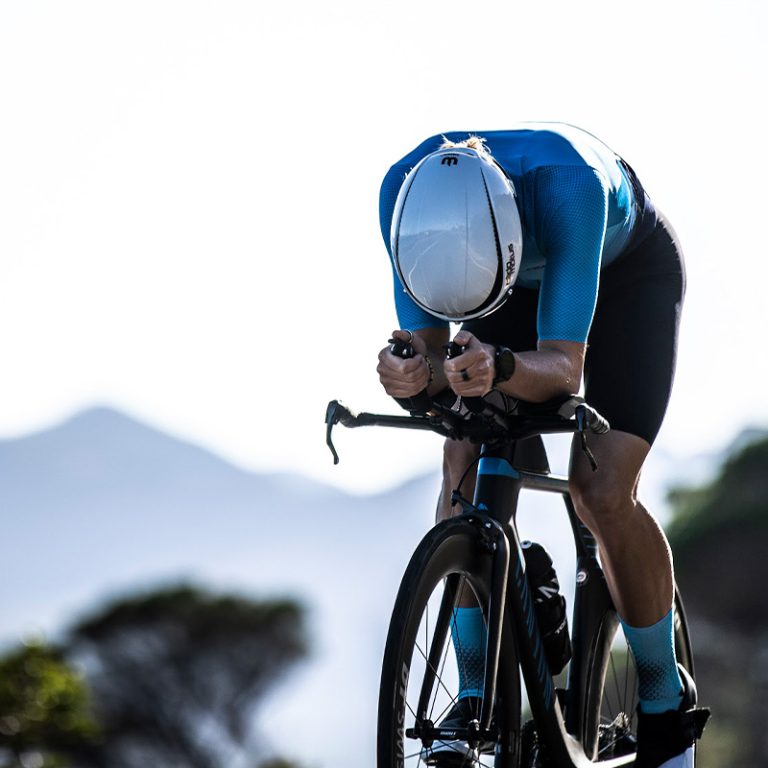
It’s no secret that aerodynamics is an important factor in triathlon performance, even on a hilly course like the Alpe d’Huez Triathlon L. Don’t be wrong: despite the 3,000 metres of ascent to be overcome, this circuit in the Oisans region has many fast, rolling sections (particularly the first 30 kilometres leading up to the foot of the Col de l’Alpe du Grand-Serre). The design of the Cádomotus Omega reduces drag and maximises speed. Its short, streamlined shape and optimised vents allow the head to move freely without compromising air penetration. During a cycling event lasting more than four hours, no triathlete stays in the same position! According to in-depth studies carried out by the Universities of Delft and Eindhoven, the Omega outperforms the rest of the field in terms of overall performance when subjected to different conditions.
Safety and comfort: beyond marginal gains
However, aerodynamics must never compromise safety, the primary function of a helmet. The Cádomotus Omega incorporates advanced safety technologies to protect athletes when racing or training. Its lightweight carbon fibre shell offers exceptional impact resistance, guaranteeing optimum protection in case of a fall or impact. The adjustable retention system and impact-absorbing inner reinforcement enhance the helmet’s essential function.
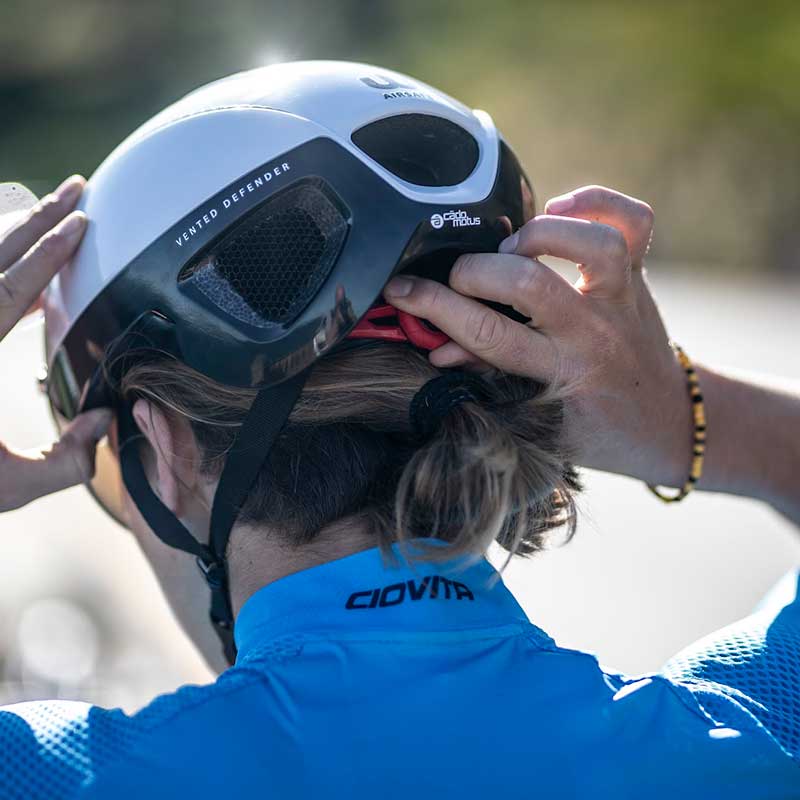
Then there’s comfort. While the Omega performs well, it is surprisingly easy to use. At 290 grams (barely heavier than a traditional aero helmet), it is considerably lighter than a TT helmet. In addition to its simplicity, the adjustment of the straps allows ultra-precise adjustment according to the preferences of each athlete. What’s more, its removable and washable interior padding ensures that you stay feeling fresh throughout your effort.
Wind tunnel tested and the result of years of research and innovation in the world of speed skating, the Cádomotus Omega features a visor with a magnetic fastening system that is as quick as it is reliable and smart (different glass treatments available on the Cadomotus website).
Which helmet to choose... the Global Triathlon Network report
The GTN team wanted to find out more about the helmets used by triathletes… The verdict is clear: balance is everything.