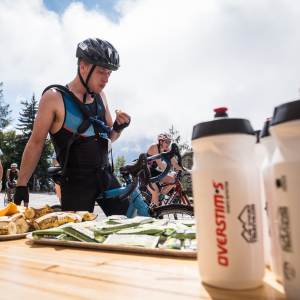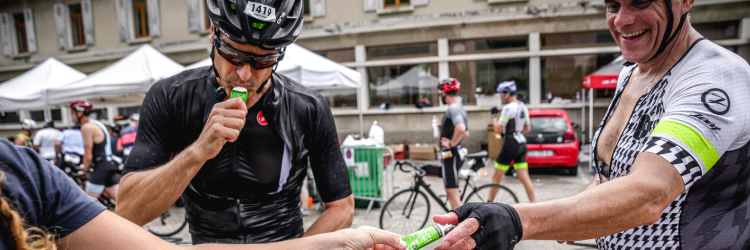
Since 2017, Overstim.s has been the nutrition partner of the Alpe d’Huez Triathlon. Its expertise and the diversity of its product range enable it to offer products particularly adapted to the discipline. Here are 5 nutrition tips for a successful strategy for the Alpe d’Huez Triathlon, whether in the days leading up to the race, on D-day or during the recovery phase.
1. Before the competition: opt for carbohydrate recharging!
An endurance sport by nature, triathlon is a demanding discipline for the body: it forces it to draw on its reserves, which need to be optimised a few days before a competition.
Three days before the big day, carry out what’s known as a “carbohydrate recharge”. The aim? To maximise glycogen storage in your muscles so that you have a good reserve of fuel during the race. Thanks to Malto Antioxidant, you can do this without completely overhauling your diet. Drink 1.5 litres of the drink prepared with Malto Antioxidant every day for three days: you’ll be providing your body with easily digestible carbohydrates before the race.
In addition, while Malto Antioxydant will prevent you from over-consuming starchy foods (the famous pasta cure… which isn’t exactly optimal!), remember to reduce the amount of fibre you eat (raw fruit and vegetables in particular): this will limit the risk of digestive problems during the event.

2. Last meal: aim for energy and digestibility
You could call it the “last meal dilemma”, as hesitations are so common in this area! To eat or not to eat? And above all, what to eat? Overstim.s provides a simple and effective answer with its Gatosport range, which meets both pre-competitive requirements: very high digestibility and a high energy intake.
Overstim.s Gatosport is easy to prepare and can replace the last pre-race meal. It provides more than 500 calories per portion and can be eaten up to an hour before the start (handy if you don’t want to lose too much sleep!). Some triathletes even eat a few mouthfuls in the start locker room to provide energy just before the start of the race.
Tip: chew each mouthful of Gatosport thoroughly to improve digestion. Yes, digestion starts in the mouth, with saliva!

3. During the race: eat regularly
To perform at your best during the event, it’s essential to adopt a solid refuelling strategy. The goal is to provide your body with the fuel it needs to work at full capacity, without suffering from fatigue or digestive problems.
Cycling:
Between swimming and cycling, you don’t always have time to refuel properly because you have to concentrate on the transition. Once you’re settled on your bike, take an antioxidant gel and swallow a few sips of Hydrixir Bio drink. Every 45 minutes, give your body a boost of energy with energy gels or energy bars.
On the Alpe d’Huez Triathlon, the last difficulty common to all the bike courses is the 21 laces climb. Remember to eat and drink at the foot of the climb, then take advantage of the two aid stations.
Running:
It’s often during the running part of the race that digestive problems can arise, as the impact of each stride takes its toll on your stomach, which has already been sorely tested by previous efforts. You therefore need to take care with your intake by choosing products that are easy to digest, especially as the Alpe d’Huez Triathlon running course includes downhill sections, where the digestive system is put under even more strain. Opt for energy gels or energy bars, for example.
Eat a solid product every 45 minutes or so to avoid feeling drained. At the end of the race, with less than an hour to go before the finish line, take a Coup de fouet energy gel, then, with around twenty minutes to go, a Red Tonic energy gel. Thanks to their instant energy, these two gels will keep you going right up to the last few metres!
4. During the race: don't neglect hydration!
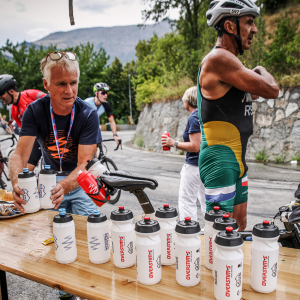
Hydration is a crucial part of refuelling. Without it, you’ll literally dry out and get stuck! It’s all the more important because the weather conditions at the Alpe d’Huez Triathlon can be very hot, even scorching. At the end of July, the sun is beating down hard on the 21 bends, as well as on the running course – despite the altitude. HYDRIXIR BIO is your best ally in this situation. The drink has been specifically formulated to provide optimum hydration and the energy needed to maintain performance throughout the effort.
On the other hand, don’t swallow large quantities of water all at once: your stomach would be hard put to manage such a volume of liquid during exercise and gastric emptying would be very complicated. It’s better to drink little, but often.
Cycling:
Take a few sips regularly (every 10-15 minutes).
Running:
Take a few sips every 10-15 minutes. Rinse your mouth out with clean water if necessary.
5. Recovery phase: get regenerated straight away!
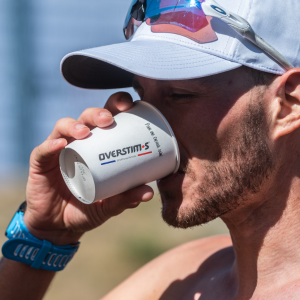
Once you’ve crossed the finish line, it’s time to recover! As well as the rest you’ll be getting, remember to take care of your intake in the first few hours after the event, because it’s during this phase that a large part of the muscle recovery takes place. Prepare 500 ml of elite recovery drink and sip it after the finish.
Tip: to optimise your recovery during training, you can also consume Elite Recovery Drink in the last few weeks before the following competition.